Why Cellulite Can Become More Noticeable in Your 30s and 40s
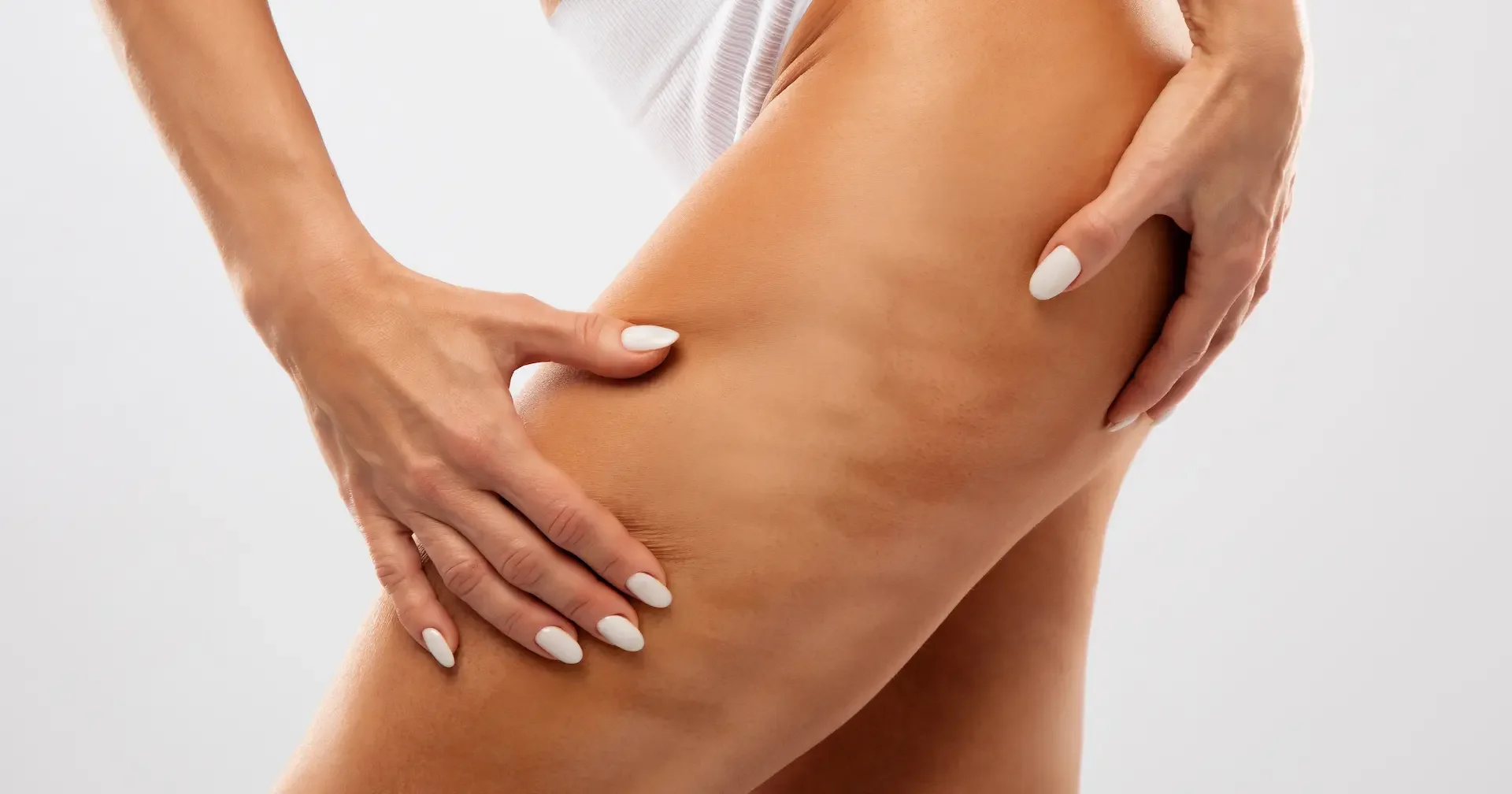
Cellulite often becomes more visible in the 30s and 40s, sometimes seemingly overnight. The texture may feel new, the skin less firm, even if your weight hasn’t changed much.
This can be unsettling, but it’s also a very common physiological shift, not a sign that something is going wrong.
What’s actually contributing to cellulite?
Cellulite isn’t caused by one thing. It reflects changes happening beneath the skin, especially during perimenopause.
1. Shifts in estrogen
Estrogen plays a role in circulation, collagen production, and how fat is stored under the skin. As estrogen becomes less predictable in perimenopause, connective tissue can lose some of its firmness, allowing underlying fat to push upward and create a dimpled appearance.
This is a structural change.
2. Changes in circulation and lymphatic flow
Hormonal shifts can affect blood flow and fluid movement. When circulation slows or fluid is retained more easily, tissue can appear more uneven.
3. Loss of muscle tone over time
Beginning in the early to mid-30s, muscle mass naturally declines unless it’s actively supported. Less muscle under the skin can make normal fat tissue more visible, especially in the thighs, hips, and glutes.
Cellulite often becomes more noticeable not because there’s more fat — but because there’s less structural support underneath. We need muscle, ladies.

What helps: Naturally and sustainably
The goal isn’t to eliminate cellulite entirely (nearly all women have it), but to support tissue health, strength, and circulation so skin looks and feels more resilient.
1. Strength training to rebuild structure
Weight lifting is one of the most effective tools for midlife body composition, it:
Builds muscle that supports skin from underneath
Improves circulation and insulin sensitivity
Helps tissue appear firmer over time
You don’t need extreme workouts. Consistency matters far more than intensity.
2. Eat to support collagen and connective tissue
Skin and fascia require nourishment.
Adequate protein is essential
Vitamin C, zinc, and copper support collagen production
Chronic under-eating can weaken connective tissue over time
Fueling well helps the body maintain structure, not just weight.
3. Support fluid movement and recovery
Simple practices can make a visible difference:
Walking regularly
Gentle movement on rest days
Hydration
Prioritizing sleep
Rebound jumping
These support circulation and lymphatic flow, which can improve skin texture over time.
A different way to think about cellulite
Cellulite in perimenopause isn’t a flaw to fight, it’s often a signal that your body is reorganizing itself.
When muscle, hormones, circulation, and nourishment are supported, tissue often becomes firmer and more resilient.
With some targeted care, your body can feel strong, supported, and well-held again.